
What is An EPC?
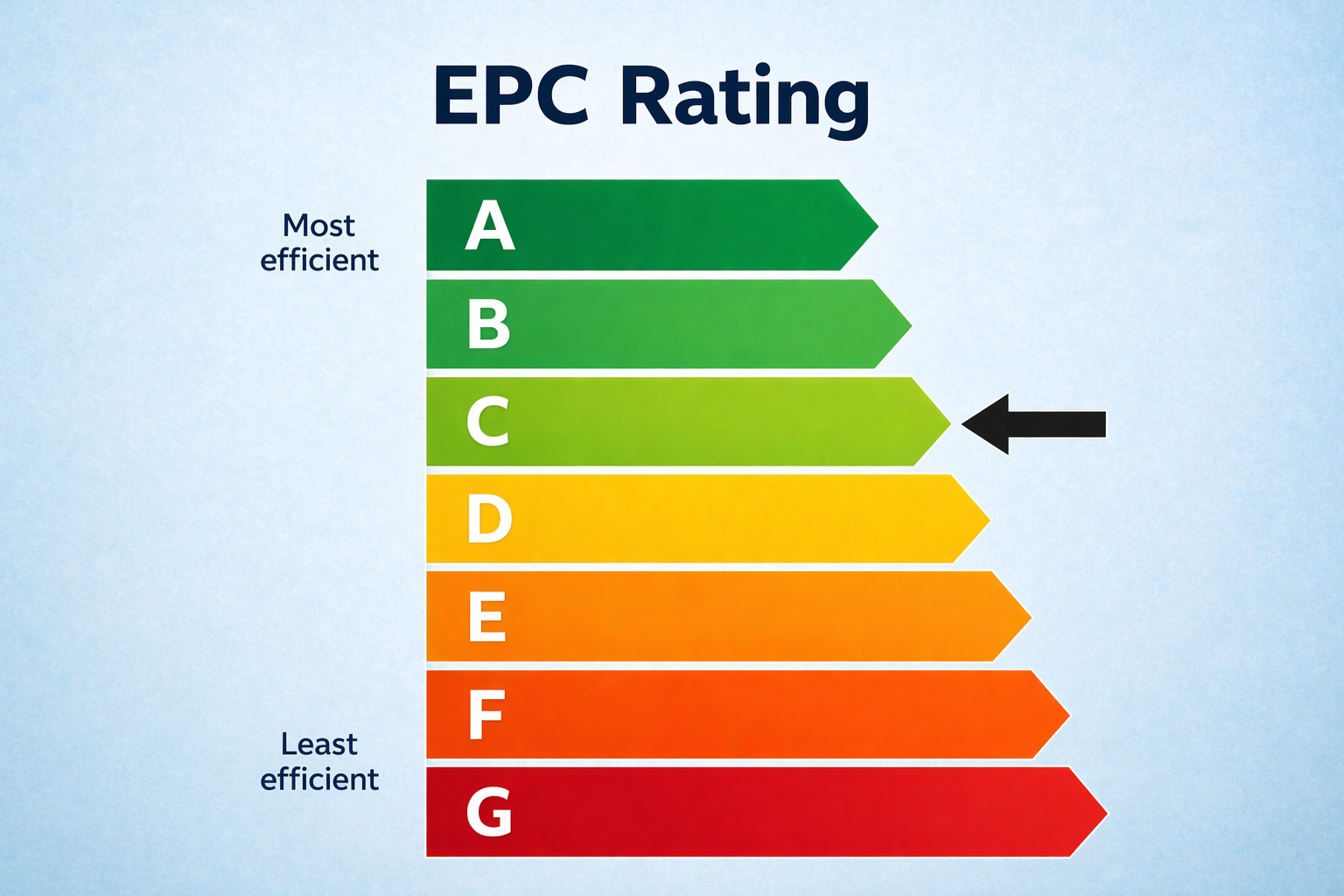
Why an EPC C Rating is Important
Legal Direction (Where the Law is Heading)
The UK government is moving toward a higher minimum standard for rental properties
Current Legislation
Under the Minimum Energy Efficiency Standards (MEES):
- Rental properties must currently achieve an EPC rating of E or above
- Properties rated below E cannot legally be let (unless exempt)
What’s changing
Government policy continues to push toward:
- EPC C as the new minimum standard
- A phased implementation over the coming years
- Application to both new and existing tenancies
Financial Impact
Without EPC C:
- Higher energy bills
- Reduced tenant demand
- Lower property value
- Expensive future upgrades)
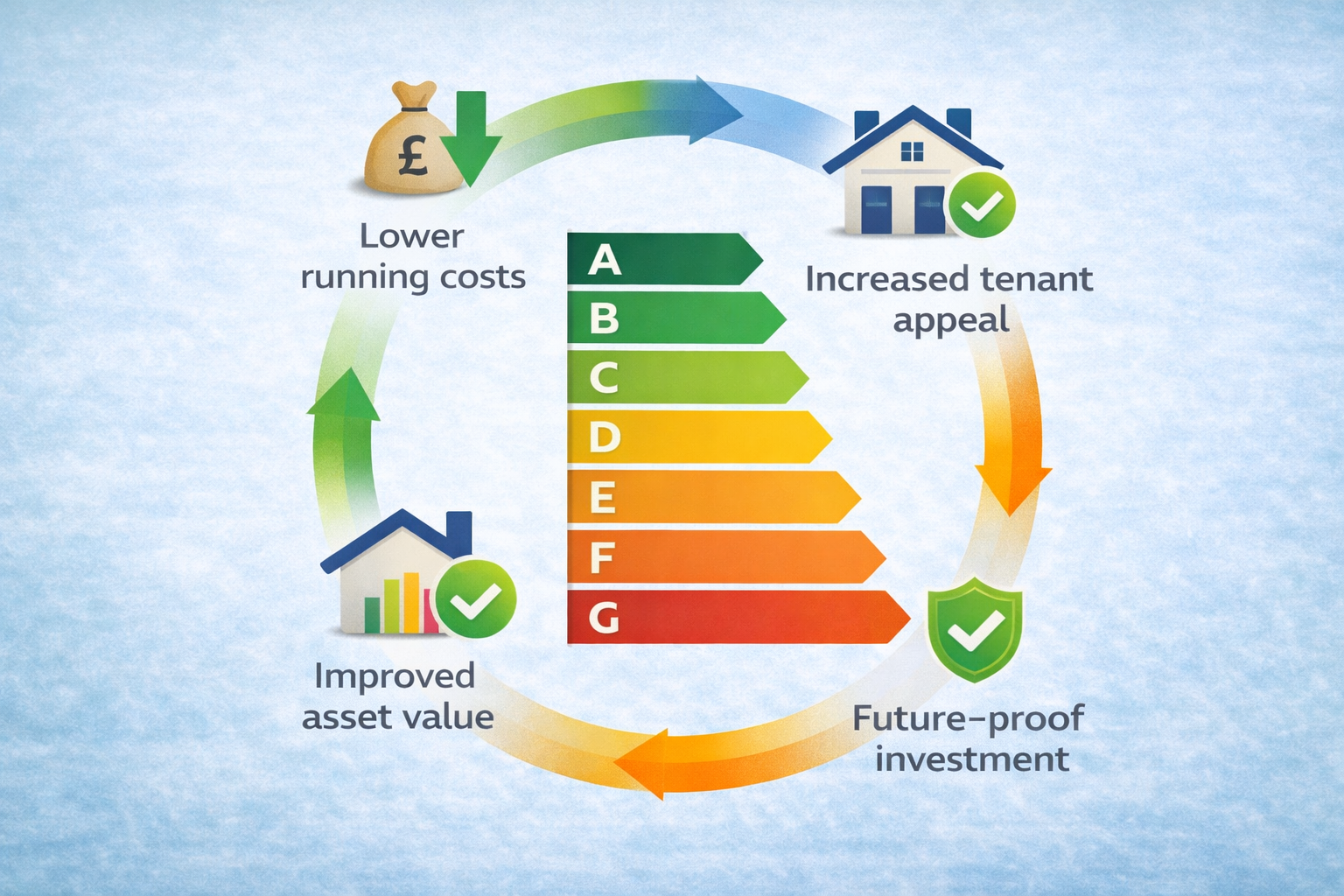
With EPC C:
Compliance & Awaab’s law
Energy efficiency is directly linked to damp and mould risk:
- Low EPC rating = colder property
- Cold surfaces = condensation
- Condensation = mould
This creates:
Legal risk under Awaab’s Law
Key Point
EPC C is not just about energy — it’s about compliance, property condition, and tenant health.
How to Achieve EPC C
Common improvements include:
- Loft insulation
- Internal or external wall insulation
- Efficient heating systems
- Double glazing
- Ventilation upgrades
What Most Landlords Get Wrong
Many believe EPC is just a formality.
In reality:
It directly affects legal compliance, tenant well-being, and long-term property performance.
Risks of Ignoring EPC Improvements
- Fines under MEES regulations
- Inability to legally let the property
- Emergency upgrade costs
- Increased complaints relating to damp and mould
Our Approach
At Awaab’s Law Ltd, we go beyond improving EPC ratings.
We:
- Improve energy efficiency
- Reduce condensation and mould risk
- Deliver practical upgrade solutions
- Provide evidence to support compliance
Key Takeaway
-
An EPC C rating future-proofs your property, reduces risk, and supports compliance with current and upcoming legislation.
Unsure if your property meets current or future EPC requirements?
Highly experienced PROPERTY HEALTHCARE EXPERTS
We’re here to help
Whether you’re a landlord, property manager, or tenant, our team provides expert guidance, practical solutions, and peace of mind to ensure every home is safe, healthy, and compliant.
Get in touch today
Receive your free quote

“Highly Professional”
Awaab’s Law Ltd identified issues that previous contractors missed. Their report, evidence, and solutions gave us full confidence that our properties are compliant and protected.
Michael West